


























India’s First Private Orbital Rocket Lifts Off
Skyroot Aerospace successfully launched Vikram-1 from Sriharikota, making history as India's first privately developed orbital-class rocket and boosting the country's private space sector.
India’s First Private Orbital Rocket Lifts Off
Skyroot’s Vikram-1 Carries a Special Handwritten Postcard from Prime Minister Narendra Modi
CNB WORLD TIMES
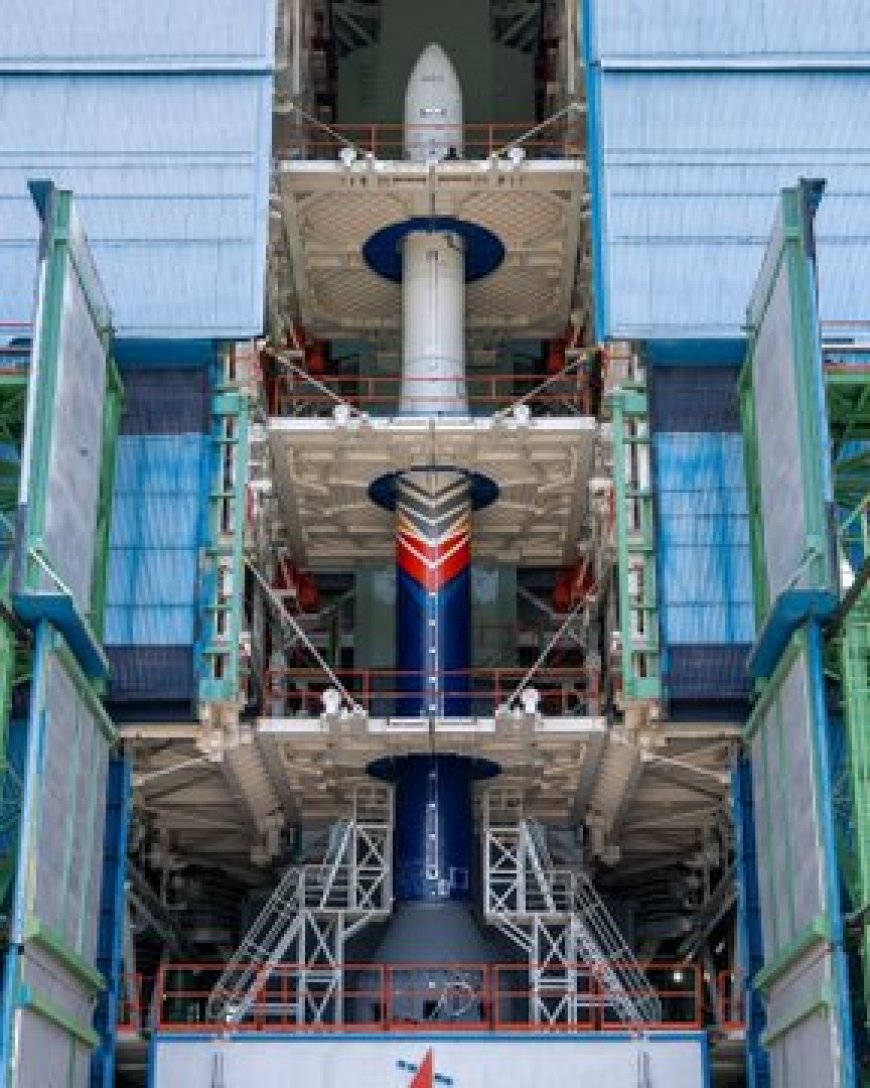
Sriharikota: Skyroot Aerospace successfully launched Vikram-1 from the Satish Dhawan Space Centre, making history as India's first privately developed orbital-class rocket to take flight.
The maiden mission, named Mission Aagaman, marks a major milestone for India's private space sector. It reflects the success of the Indian Space Policy 2023, which has opened the space sector to private companies and encouraged innovation.
Vikram-1 is a multi-stage launch vehicle built with an all-carbon composite structure, solid-fuel boosters and 3D-printed liquid engines. The rocket can carry payloads of up to 350 kg to Low Earth Orbit (LEO).
The mission is targeting a 450-km orbit and is carrying six customer payloads. These include Skyroot's SCOPE satellite, technology demonstration payloads, Grahaa Space's SOLARAS S3 satellite, DCUBED's technology payload and Embrace, a robotic arm designed to capture orbital debris.
The rocket also carries symbolic payloads, including Cosmic Bloom, a floral-shaped artwork, an 18-karat gold micro-rocket, and a handwritten postcard from Prime Minister Narendra Modi. The gold micro-rocket features tiny sculptures of scientists C. V. Raman, Vikram Sarabhai and A. P. J. Abdul Kalam.
India's space sector has witnessed rapid growth after the Government introduced major reforms through the Indian Space Policy 2023. Private companies are now participating in satellite manufacturing, launch services, space applications and commercial space activities.
India's space startup ecosystem has expanded from one startup in 2014 to more than 400 startups in 2026. The country's space economy, currently valued at around USD 8.4 billion, is expected to reach USD 40–45 billion by 2030 and aims to touch USD 100 billion by 2040.
The successful launch of Vikram-1 strengthens India's position as an emerging global space power and highlights the growing role of private companies in the country's space programme.
What's Your Reaction?