
























The provision could be misused to target political opponents
New Delhi, 21st August 2025: The Centre introduced three bills – The Constitution (130th Amendment) Bill, The Jammu & Kashmir Reorganization (Amendment) Bill and The Government of Union Territories (Amendment) Bill – in the Lower House on Wednesday. The three legislations, along with the Promotion and Regulation of Online Gaming Bill, 2025, were introduced in the Lower House of Parliament.
The provision could be misused to target political opponents
PM ensured the bill was drafted to include himself
CNB World Times
New Delhi, 21st August 2025: The Centre introduced three bills – The Constitution (130th Amendment) Bill, The Jammu & Kashmir Reorganization (Amendment) Bill and The Government of Union Territories (Amendment) Bill – in the Lower House on Wednesday. The three legislations, along with the Promotion and Regulation of Online Gaming Bill, 2025, were introduced in the Lower House of Parliament.
The Constitution (One Hundred and Thirtieth Amendment) Bill, 2025
What Is the Bill About?
Introduced in the Lok Sabha on August 20, 2025, the bill proposes to automatically remove individuals from high executive offices—such as the Prime Minister, Chief Ministers, and ministers at both the Union and state/Union Territory levels—if they have been arrested or detained for 30 consecutive days on serious criminal charges (offenses punishable with a minimum of five years’ imprisonment)
This amendment would apply without requiring a court verdict, unlike the current framework where disqualification follows conviction.
Quick Summary Table
Aspect Details
----------------------- ----------------------------------------------------------------------------------------
1.Objective :Remove top executives from office if detained for 30 consecutive days on serious charges.
2.Scope :PM, Union/state/UT ministers, CMs
3.Key Trigger :Arrest/detention for ≥30 days; offenses punishable with ≥5 years
4.Current Status :Referred to JPC for review
5.Support Argument:Promotes accountability and cleansing of politics
6.Opposition Argument:Risks misuse against opposition leaders; undermines due process
Key Provisions:
1. Automatic removal from office on the 31st day of continuous detention.
2. Applies to PM, Union ministers, CMs, and state/UT ministers
3. Aimed at enforcing accountability and curbing criminalization in politics, mirroring civil service suspension rules.
4. Removal could be reversed—such as reappointment—by the President or Governor once the individual is released.
Legislative Status:
The bill has been referred to a Joint Parliamentary Committee (JPC) for detailed examination and recommendations.
Political Reactions:
1. Supporters argue the amendment will instill integrity and ethical standards in governance
2. Opposition figures—such as Asaduddin Owaisi, Mamata Banerjee, Priyanka Gandhi, and others—have voiced concerns that the provision could be misused to target political opponents, undermining democratic principles and due process
3. Kerala CM Pinarayi Vijayan criticized it as part of a neo-fascist strategy", warning of federal destabilization and misuse of investigative agencies for political ends.
4. Some opposition MPs labeled the bill “draconian”, “unconstitutional,” and “undemocratic”, fearing it erodes fundamental democratic safeguards
Why It Matters?
This constitutional amendment is significant not just for what it proposes, but for the broader implications it carries:
1. Legal Shift: It would alter the foundational premise that removal from office follows a court conviction—not mere detention.
2. Democratic Balance: Opponents see a clear threat to natural justice and procedural fairness.
3. Political Stakes: Could fundamentally reshape accountability and power dynamics in India’s polity.
4. Judicial Challenge Likely: Given the concerns, it’s expected the bill might face scrutiny both in JPC hearings and later in court.
Modi’s Involvement:
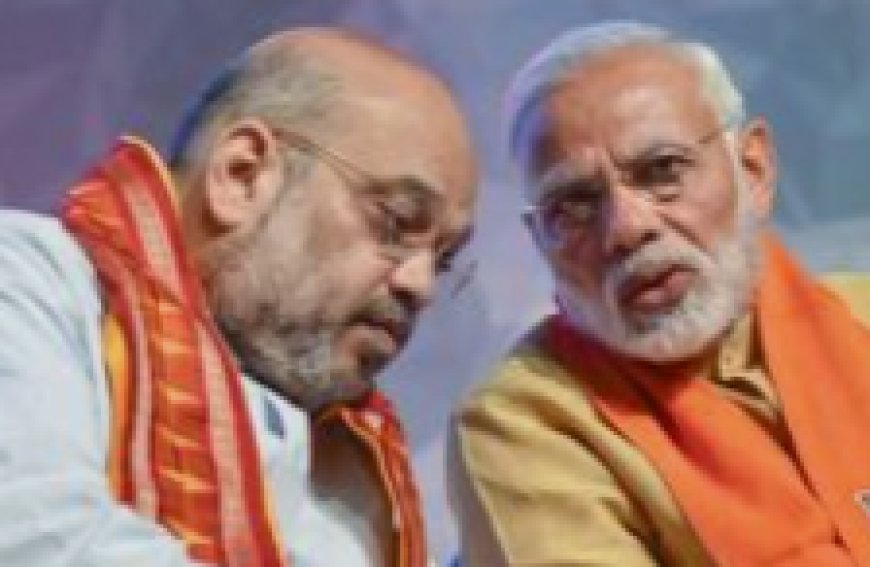
According to Union Home Minister Amit Shah, Prime Minister Narendra Modi personally ensured the bill was drafted to include himself under its scope, emphasizing transparency and self-accountability
Shah argued that Congress is against the bill because it wants to stay above the law, run governments while in jail, and maintain its grip on power.
In a post on X, he compared Prime Minister Narendra Modi, who “introduced a constitutional amendment to bring himself within the ambit of the law," and former PM Indira Gandhi, who “through Constitutional Amendment No. 39 (The amendment effectively shields the high-ranking officials from electoral challenges and judicial review.), granted such a privilege to the Prime Minister that no legal action could be taken against them."
What's Your Reaction?