




















Bhadrak Trains Forest Staff to Protect Ancient Horseshoe Crabs
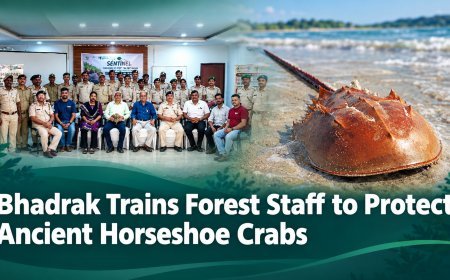
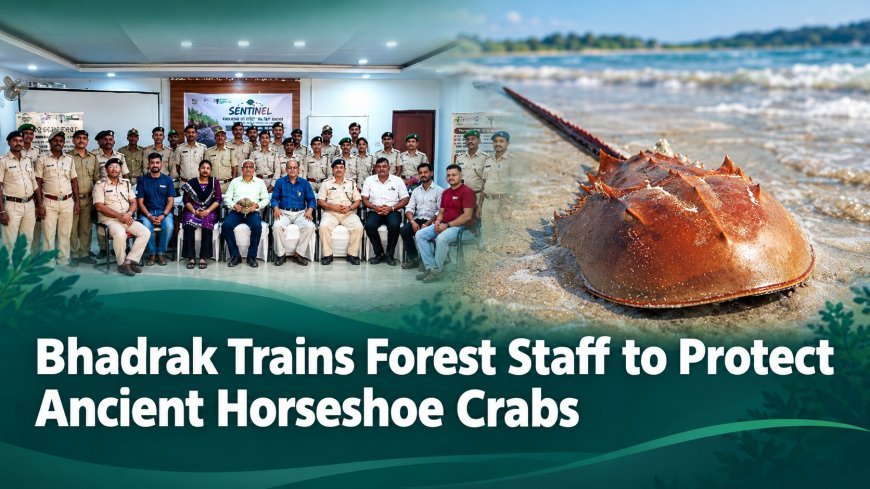
Thirty frontline forest staff received hands-on training in horseshoe crab conservation at Bhadrak, organised by Earth Crusaders Organisation with wildlife conservation partners.
Bhadrak Trains Forest Staff to Protect Ancient Horseshoe Crabs
Horseshoe crabs have existed for more than 445 million years, long before dinosaurs appeared.
CNB WORLD TIMES
Bhadrak, October 9, 2026: Earth Crusaders Organisation, in collaboration with the Wildlife Conservation Trust and Bhadrak Wildlife Division, organised a day-long capacity-building and hands-on training programme on horseshoe crab conservation at the Satavauni Interpretation Centre in Bhadrak Range.
A total of 30 frontline forest staff members participated in the programme. Prof. Bisnu Prasad Dash, Adjunct Professor and Advisor to Project SENTINEL, provided training on horseshoe crab species, their history, physical characteristics and conservation methods. A fibre-cast model of a horseshoe crab was used for practical learning.
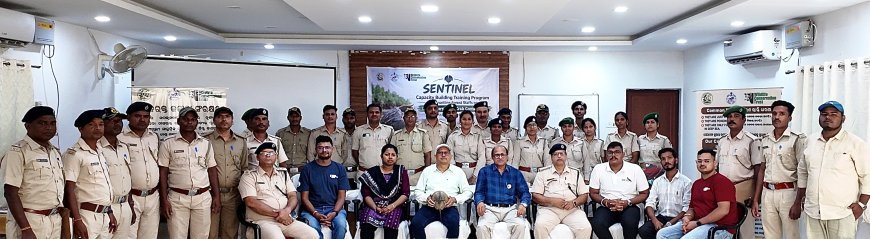
The programme was inaugurated by the Divisional Forest Officer of Bhadrak Wildlife Division. Aurobindo Samal served as the convenor, while Pritikanta Mohapatra was the co-convenor.
Mr. Akash Padhan, Research Fellow at the Centre for Wildlife Studies, and Mr. Soumyaranjan Dash of the Zoological Survey of India attended as resource persons.
The programme aimed to strengthen the skills of frontline forest staff and improve conservation efforts for horseshoe crabs and their coastal habitats.
Why Are Horseshoe Crabs Important?
Medical Importance
Horseshoe crabs are important for medical safety. Their blue blood contains substances used to detect bacterial endotoxins in injectable medicines, vaccines and medical devices. This testing helps ensure that these products meet essential safety standards.
The conservation of horseshoe crabs is therefore important for both marine biodiversity and medical research.
Ancient Marine Species
Horseshoe crabs have existed for more than 445 million years, long before dinosaurs appeared. Although they are called crabs, they are not true crabs. They are more closely related to spiders, scorpions and ticks.
Their body structure has remained relatively unchanged over millions of years, earning them the name “living fossils.”
Habitat and Distribution
In India, two species—Tachypleus gigas and Carcinoscorpius rotundicauda—are found along the northeastern coast, mainly in Odisha and West Bengal, with their distribution extending to the northern coast of Andhra Pradesh.
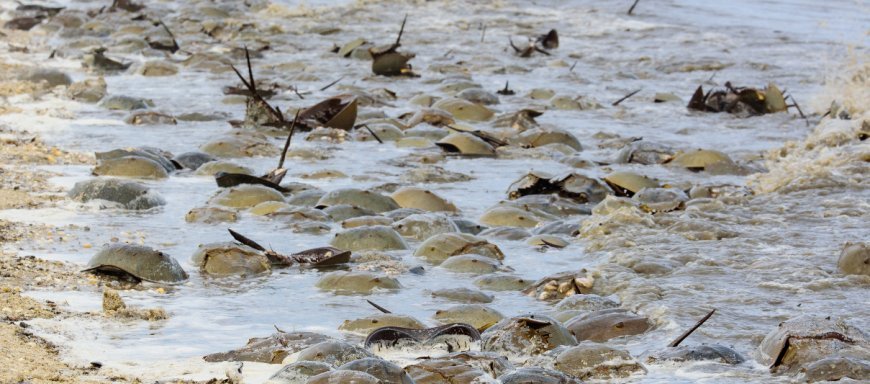
In Odisha, they are found in sandy coastal areas, estuaries and creeks. Parts of the Balasore coast, including Chandipur and Dublagari beaches, are known habitats.
Horseshoe crabs gather at suitable breeding beaches during high tides, particularly around full moon and new moon periods.
Feeding Habits and Role in Nature
Horseshoe crabs feed mainly on marine worms, clams and other small organisms. Their eggs provide food for coastal birds, fish and other animals, making them an important part of the marine food chain.
Threats and Conservation
Habitat destruction, coastal development, pollution, overharvesting and accidental capture in fishing nets threaten horseshoe crab populations. Damage to breeding beaches can also affect their reproduction.
Both Indian species receive legal protection under India's wildlife conservation framework. Protecting their habitats, promoting responsible fishing and creating public awareness are essential for their survival.
The forest officials and staff members of the Bhadrak Wildlife Division who participated in the training programme included Arun Kumar Biswal, Divisional Forest Officer (DFO); Miss Dharitri Murmu, Assistant Conservator of Forests (ACF); Kartikeswar Khandai, Forest Range Officer, Chandbali Range; and Atulya Kumar Mohanty, Forest Range Officer, Basudevpur Range. All Foresters and Forest Guards of the Bhadrak Wildlife Division also participated in the programme.
The training programme in Bhadrak is expected to support local conservation efforts by equipping frontline forest staff with knowledge and practical skills to protect these ancient marine animals and their habitats.
What's Your Reaction?