




















Unearthing Odisha's Forgotten Gateway: The Rise and Fall of Chandbali Port Under British Rule

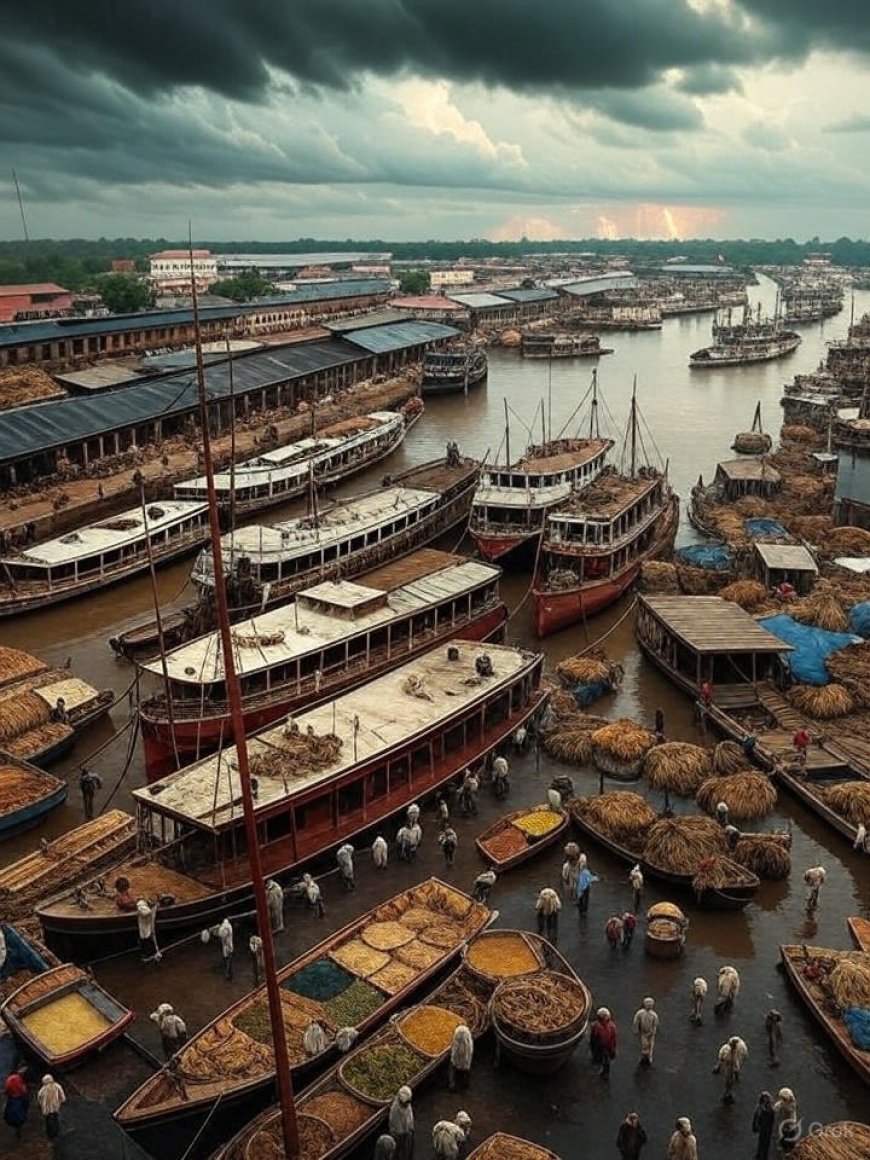
In the sleepy riverside town of Chandbali in Odisha's Bhadrak district, where the Baitarani River meets the salty embrace of the Bay of Bengal, remnants of a bygone era occasionally surface from the muddy banks. Just last week, locals unearthed a 500ft (152m) iron anchor chain, a colossal relic from the British Raj, hinting at the port's once-vibrant role in India's colonial trade networks. This discovery has reignited interest in Chandbali, a modest riverine outpost that briefly served as a lifeline for famine-stricken eastern India in the late 19th century.
Once dismissed as a mere fishing hamlet, Chandbali transformed into a bustling commercial hub after the devastating Great Famine of 1866, which claimed over a million lives across Bengal and Orissa (as Odisha was then known). British officials, scrambling to avert further catastrophe, scoured the coastline for viable import routes. Captain James Macneil, a perceptive engineer, spotted potential on the Baitarani's northern bank – a high, narrow sand ridge about 20 miles (32km) from the sea, shielded from floods and blessed with deep waters. With the backing of T.E. Ravenshaw, the Commissioner of Orissa Division, the port was formally established in 1872 – though some records date its inception to 1870 – and swiftly dubbed "Ravenshaw Port" in honour of its patron. The government leased 179 acres from local zamindars, erecting essential infrastructure: a customs house, telegraph office, post office, police station, dispensary, and a staging bungalow for weary travellers.
What elevated Chandbali from obscurity was its strategic geography. Linked to the hinterlands via the Matai River, the Bhadrak road, and a web of tidal creeks, it funneled goods from the fertile deltas of Cuttack and Balasore districts straight to the sea. The port absorbed trade from its ailing neighbour, Dhamara, becoming the go-to harbour for passenger and cargo vessels when silting choked larger berths like False Point (now Paradip). Light steamers from the Bengal and Orissa Steamship Company chugged almost daily between Chandbali and Calcutta, while the Chandbali Steamship Service handled local runs. By the 1880s, it was Odisha's premier river port on India's east coast, connecting not just to Kolkata but to far-flung outposts like Visakhapatnam, Madras (Chennai), Ceylon (Sri Lanka), Burma (Myanmar), Malaysia, Indonesia, Mauritius, and the Maldives.
Trade flourished, with rice – Odisha's golden staple – dominating exports. Paddy from the region's paddies was milled into rice and chura (flattened rice) and shipped to Bombay, Kutch, Calicut, Colombo, Galle, and even Zanzibar on Africa's east coast. Hides destined for European tanneries, oilseeds, dried fish, and jungle produce like gums and resins followed suit, often routed through Calcutta's labyrinthine Hugli River despite the cumbersome journey. Imports mirrored the colony's dependencies: sugar from Mauritius sweetened local diets, while salt, spices, cotton fabrics, and kerosene oil arrived to fuel everyday life and industry. In 1913, the port's ledger glowed with exports worth about 34 lakh rupees and imports of 29 lakh, alongside 80,000 passengers – a testament to its pulse as a coasting trade nerve centre. Mohamadan traders, with their networks spanning the Indian Ocean, played a pivotal role, bartering hides for spices and linking Chandbali to global currents.
Yet, for all its promise, Chandbali embodied the paradoxes of colonial enterprise. Born of famine relief – importing vital food grains to Balasore and Cuttack amid the 1866 crisis – it was engineered for extraction, not equity. British priorities favoured Calcutta's grand docks over peripheral outposts, leaving Chandbali underfunded and vulnerable. River silting confined it to small steamers, while a ferocious storm on 22 September 1885 ravaged its facilities, underscoring the perils of its exposed position. The late-19th-century railway boom, snaking through Odisha's interior, siphoned cargo away, rendering river routes obsolete. By the 1930s, trade dwindled to sporadic coastal hauls, and the port faded into obscurity, maintained at a chronic loss to the exchequer.
Historians like Madhusudan Das, a prominent Orissa reformer, decried this neglect in 1913, urging a Bhadrak-Chandbali rail link to revive its fortunes – a plea that went unheeded. Today, as the anchor chain's rusting links gleam under conservation efforts, Chandbali whispers of untapped potential. Local scholars at Chandbali College, founded amid the port's heyday, see echoes of Kalinga's ancient seafaring legacy – from Ashoka's era to medieval traders – in this colonial interlude. "It was our window to the world," says college principal Dr. S.K. Patra, "a bridge built in crisis but broken by indifference."
As India marks its maritime heritage, Chandbali's story challenges the narrative of colonial progress. It was a port of survival, not empire – a fleeting beacon on Odisha's shores, now half-buried but not forgotten.
What's Your Reaction?